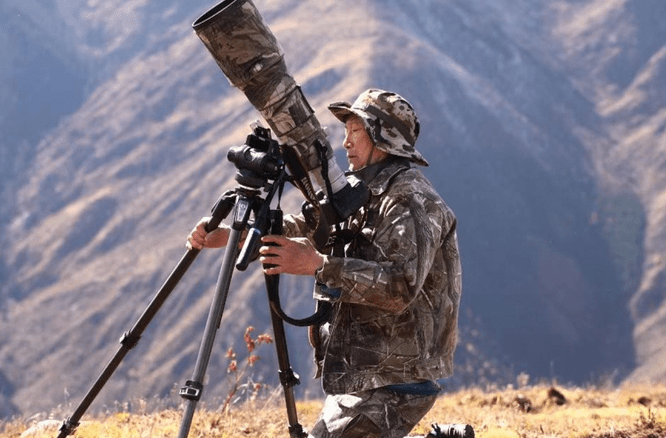
“People only live once, I can do what I think is worthwhile without any scruples, and this is happiness.” ——– Changda Wang
On the afternoon of June 1, 2016, an eighty-year-old man sat in front of his computer and carefully chose the bird pictures on the screen through his reading glasses, with difficulty. Since still in the recovery period of eye surgery, he could not go outside and had to suspend the traveling activities that lasted for more than 20 years. In turn, he sorted out the documents, preparing for his new book which is similar to the “Birds Encyclopedia.”
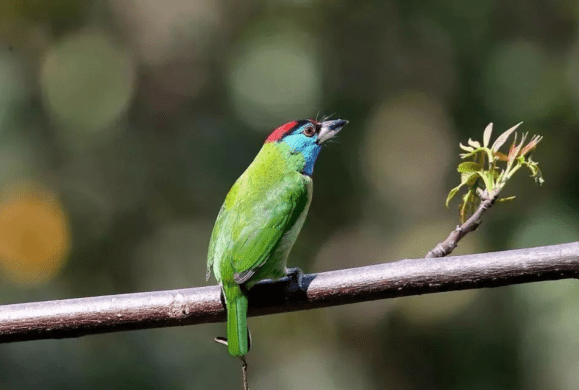
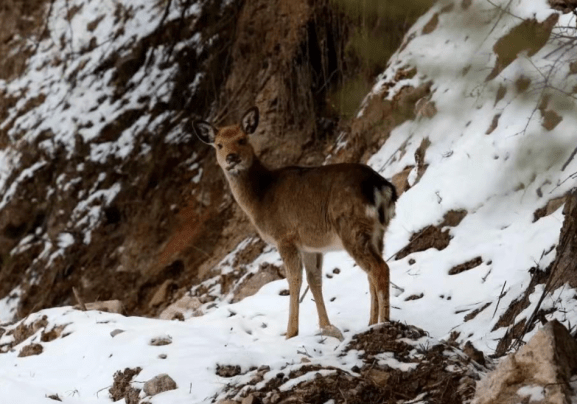
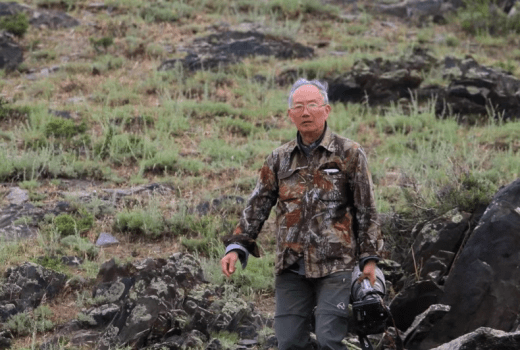
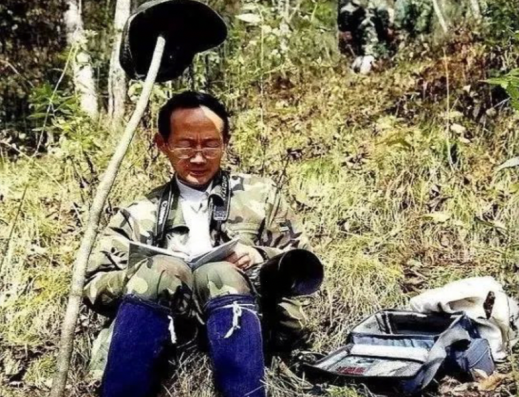
He is Changda Wang, a bird photographer and an octogenarian backpacker, traveling all his life. The unique profession of Changda Wang that always takes him away to work in the most remote reaches of the wild. He was a senior teacher in middle school for 43 years before retirement. “Traveling is always attractive to me since it makes me feel I am part of nature. Also, traveling makes me find multifaceted potentials of myself, but I still know who I am,” Changda explains. Changda always does his best to do what he is looking for. He told me that” people only live once, I can do what I think is worthwhile without any scruples, and this is happiness.” Although Changda is marching in the path of pain-staking exploration, he is happy because he considers his every adventure to be the most valuable thing in his short life. In his eyes, those snow peaks, rivers, forests, and streams are all living creatures. He blends himself into nature.
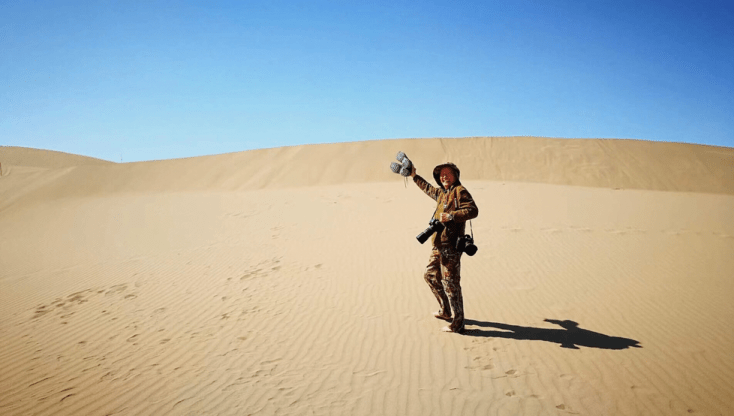
His Story Begins
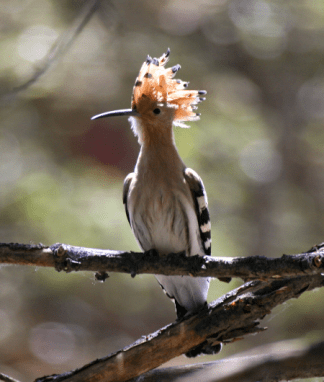
Since retiring in October 1996, Changda Wang has been traveling through many nature reserves in China more than 60 times and accumulated rich words and images resources. He is a warm-hearted environmentalist who held photography exhibitions several times to introduce scenery and wildlife of nature reserves to the public. There are about 1,400 species of birds found in China, and Changda captured above 870 species of them. Also, he photographed about 70 mammal species and 150 butterfly species, which preserve for us valuable natural information. As a backpacker, especially an elderly traveler, he has been traveling many places and has been seeing many landscapes, from canyons to snow-capped mountains. Those things all become his memories and his stories.
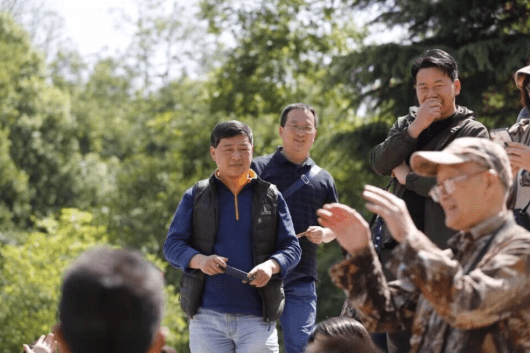
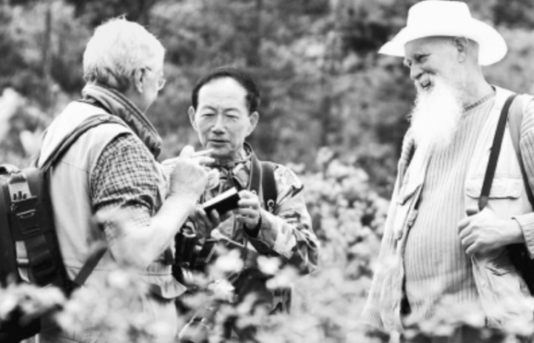
Forest Protection
“I’m too old to remember all my traveling details,” Changda Wang touched his chin when I asked for the beginning of his trip. Although there was a little bit helplessness in his tone, I could still feel his delight behind his self-mockery. He recalled something that made him smile. He dresses especially casual today, nothing like his looks on the trips. I guessed he had prepared for this interview and left plenty of time for me.
That is the horse ranch in the town of Pingwu, China. It is not the Mongolian grassland that people normally think of, but the hillsides. The altitude there is too high to grow the trees. Thus, it becomes a grass slope which is called “Alpine Meadow.” The weather is very chilly. People wear winter clothes even during the summer time. After the retirement of Changda Wang, he got the occasional chance to inspect that horse ranch.
During the Qing dynasty, the court feeds the army horses there, but it is the no man’s land nowadays. Only the forest protection personnel will stay there a few months every year. Without any ready-made shelters, the forest rangers set up a small house by themselves. An occasional inspection opportunity that let Changda go there and live with them for two weeks.
Changda Wang told me that in that two weeks, he photographed the birds’ nests, the Tibetan antelope and the Himalayan gorals. He found that photography was more interesting than he thought, and how powerful and magical nature is. The life there was totally different than urban life. Once, when they inspected outside, the ranger was caught by an iron trap, and he could not open the clip. Finally, they used a knife to gash the rubber boots and let him pull the foot out. Fortunately, his foot didn’t hurt. “At that time, I suddenly realized how dangerous we were walking there. This danger does not come from the natural environment, but the poachers.” They also seized three more traps that day.
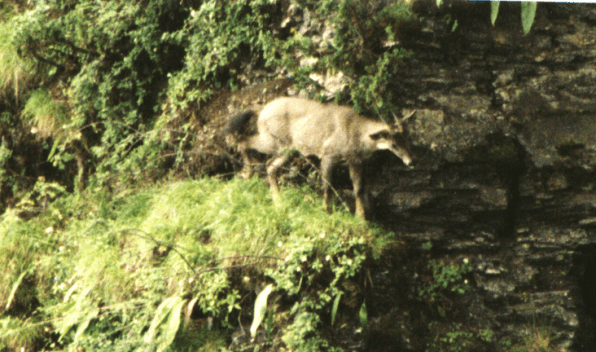
From then on, he began to travel more. He saved the birds, gorals and many other animals. “Because of hoping to save these animals, I began my trips, but actually, travel brings me more than those,” he said.
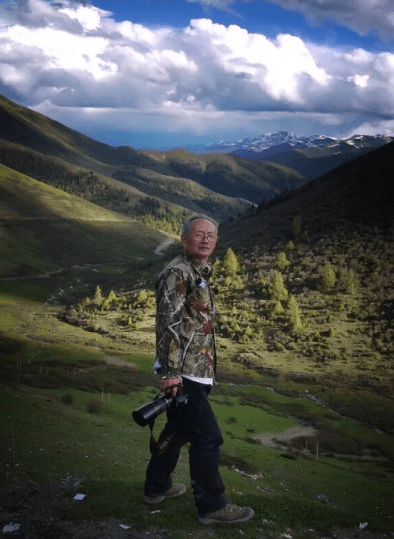
The Trek to Motuo
When I asked him for the most impressive traveling experience which may be near-to-death, he answered me without thinking. “I have been there twice. It has been 13 years since I first went there, and it was the only county with no highway link to the outside world among all of China’s 2,100 counties at that time,” he smiled. I know, that place is Motuo, and he must have some stories there. Motuo is the remotest county in the southeastern part of Tibet and is located on the southern slope of the Himalayas. In Changda’s seventies, he decided to go there.
Two ethnic groups — Menba and Luoba mainly inhabit the mysterious Motuo, which covers an area of more than 30,000 square kilometers [1]. In the belief of the Tibetan Buddhists, Motuo is the purest and holiest region in Tibet. If the highest league for Muslims is to walk from Jerusalem to Mecca, then for Tibetan Buddhism, that is to walk from Lhasa to Mutuo. Believers regard a visit to Mutuo as their greatest blessing in their lives, whether or not they can survive it. For a 70-year-old traveler and photographer, I cannot tell his reason to be there because I knew he is not a Buddhist. “We went there not for an adventure like those young guys. We want to be alive. Mutuo is a place to ‘find yourself.’ I think it should only be Mutuo that I need a grand ceremony to let some emotions go and then I can really start the latter half of my life.” At that moment, I immediately thought of the words from Kant, “Since I have already embarked on this path, then, nothing should prevent me to go down this road.[2]”
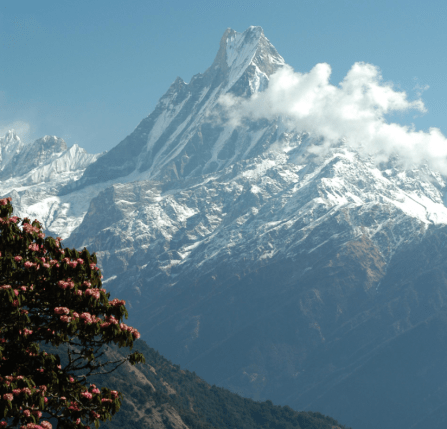
Changda told me it was hard to imagine that there are tropical fruits like bananas and pineapples growing in the snow-capped mountains before he came there. That is really the case in Motuo because it is situated in the lowest reach of the Brahmaputra River which makes it boast a typical sub-tropical moist climate and brings plenty of rainfall and spring-like days all year round[3]. Meanwhile, “Motuo is different that stands more than 1000 meters above the sea level on average and separated by a halo of snow-capped mountains around it.[3]” Thus, Motuo becomes home to numerous waterfalls and rivers as well as rich flora from tropical to cold-weather plants. “Although we know its special climate before we went there, we still hardly believe that really exists.” Motuo is the appealing place for all backpackers. Who doesn’t want to see one-tenth of China’s plant species in one place? It’s like a natural museum. Both frigid and subtropical plants are compatible and coexist growing on this small isolated ‘island.’
However, the trek will never be easy. The route to Motuo is one of the highest mortality routes in Chinese hiking routes. If there is no professional equipment, the trip is close to suicide. The trek to Motuo is like the fight between life and death. The whole journey was nearly 300 kilometers. It took them more than one week to walk in and out, which includes going through the area with the disaster of leeches and two snow mountains that are both more than 4,000 meters. They must also be careful of mudslides and beasts. Every year, there are still a lot of unfortunate people, fall off the cliff, that fall into the river ditch and die, or are swept away by avalanches and mudslides, or frozen in the snowy mountains.
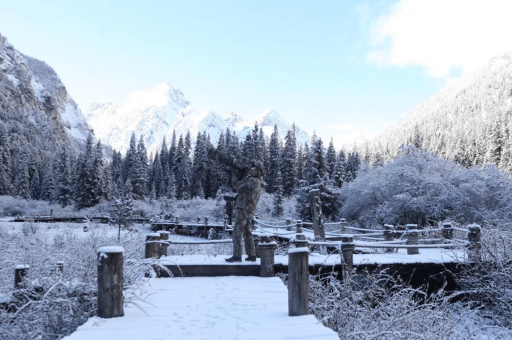
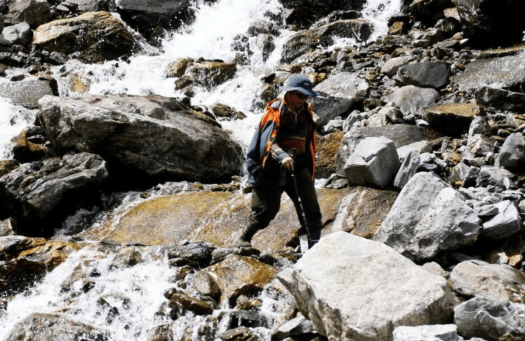
He roughly told me the experience about his two treks to Motuo. Helicopters can be seen every day but only for the military. For the first time, they just walked in and out. This year when they went there for the second time, Although there is a highway, it is only a “rough structure,” and there is no bus. They rented a car. “the road is so rugged that we felt like riding the mad cow when we are in the car. Walking is much easier sometimes,” Changda said.
Tough but happy, Changda seems satisfied with those experience. He told me that he could never give up the chance to watch and photograph those birds that he had never seen before. He walked through the dark primary forest. When he was hungry, he ate some biscuits and drank the mountain springs if he was thirsty. “I felt happier than I had ever before. How many birds are there in that thick forest? How many secrets are there? “I heard their singings and prayed for them showing up…” Finally, they got Motuo which is situated in the lower reach of the Yarlung Tsangpo River. Surrounded by clouds and mist, they could see lofty peaks and steep ravines in this untouched land. The aroma of grass still lingered in the humid air. Birds chattered in the trees; sunshine poured through the mist and woods. Water vapor, formed from the India Ocean and Bangladesh Bay, floated; surrounding the lofty peaks all year round. Azaleas and orchids abound; large white lilies blossom in vast fields [3]. “I’m in the heaven at that time,” Changda expressed.
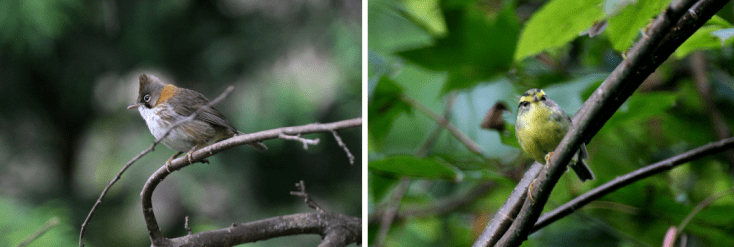
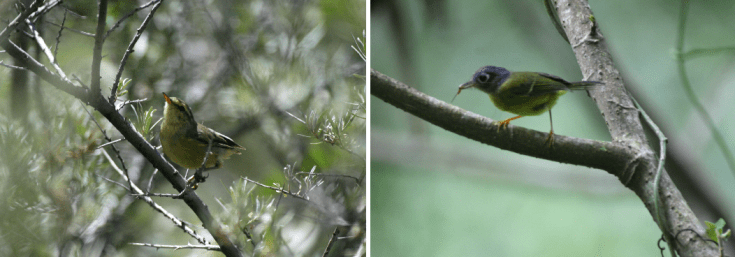
“I used to wonder why there are still local people in such a harsh place and why those tourists who come back alive still want to return there again and again. When I think of the view during the trip and the people we have encountered, I have gradually got the answer.” At one time, ethnic groups like Menba and Luoba were referred to as “wild communities” since they had little communication with the outside, and those remote villages remain mysterious even today. “Local people respect the nature in this idyllic reserve. Mystery and serenity are bestowed upon this land and its residents’ pure, simple and powerful hearts.[3]” “Traveling can be a great opportunity for self-reflection. And when you get close to those aborigines, you will feel their cultures and their differences, as well as the landscapes in Motuo,” Changda explained.
“I used to wonder why there are still local people in such a harsh place and why those tourists who come back alive still want to return there again and again. When I think of the view during the trip and the people we have encountered, I have gradually got the answer.” At one time, ethnic groups like Menba and Luoba were referred to as “wild communities” since they had little communication with the outside, and those remote villages remain mysterious even today. “Local people respect the nature in this idyllic reserve. Mystery and serenity are bestowed upon this land and its residents’ pure, simple and powerful hearts.[3]” “Traveling can be a great opportunity for self-reflection. And when you get close to those aborigines, you will feel their cultures and their differences, as well as the landscapes in Motuo,” Changda explained.
“I want to go there again if I am able to walk a few years later,” he added. Perhaps travel is already not his job, but a kind of persistence of his life. In the film Forrest Gump, the lead character said “life was like a box a chocolate. You never know what you’re gonna get.[4]” As well as the travel, you’re never know how it is and what you will feel before you really get to that place.
Advice for planning a Trip to Wilderness
As a seasoned traveler who is on the road all year round, Changda Wang accumulated much wilderness travel experience. Travel to the wild enables unique and exclusive vacations and experience for leisure travelers. Changda explained, “Wild places are the fantabulous choices for someone who wants to retreat from civilization, reconnect with the earth, and find healing, meaning, and significance. But at the same time, it’s not always enjoyable and safe.” One settler in the early 1600s stated, “Wilderness is a dark and dismal place where all manner of wild beasts dash about uncooked.[5]” In contrast to this utilitarian ideal, three centuries later, an American author stated, “Wilderness is the ultimate source of health-terrestrial and human.[5]” Public views of the wilderness have shifted more towards a protection orientation emphasizing sustainable development and balance and harmony with nature nowadays. A group of people who are called environmentalists, backpackers and explorers may often go to the wild for different purposes. The similarity is that they connect themselves to the wild and nature. “Exploring the nature and wild is not for occupation or invasion, we want to protect it and love it, as well as we love ourselves,” Changda said.
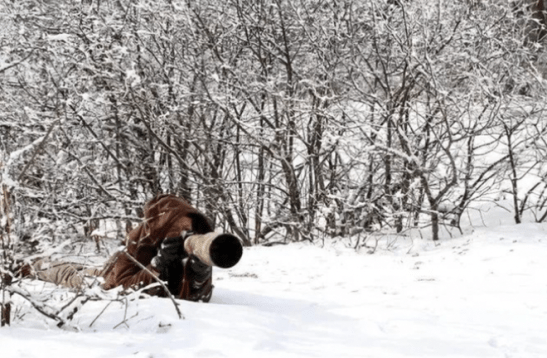
People need to prepare and plan their trip before access to the wilderness. Changda Wang gives us some essential factors traveling to the wilderness [5]:
– Plan Ahead and Prepare
You need to know the places and to schedule the trip before you begin it. It’s better for you to visit in a small which will not be not like a visitor group but still have someone company you in the case of emergency. Extreme weather and hazards should also be considered.
– Travel and Camp on Durable Surface
There is a saying, “good campsites are found, not made.”
– Dispose of Wastes Properly
Pack it in and pack it out. Don’t be afraid of dirty. In many places, there is no trash bin; you need to pack out all your trash, leftover food, and litter.
– Leave what you find and respect the wildlife
Try not to change the nature which means you’d better avoid bringing something in and not take something out. The important is that observing wildlife from a distance.
The above information is regarding Changda’s experience and also adapted from the Leave No Trace: Center for Outdoor Ethics. Entering the wilderness not only means being closer to nature, but it can also be the approaching the dangers and also bring damage to nature.
Although Changda Wang is a bird lover, he doesn’t support keeping birds as pets. People need to go back to nature, to find the things they love, and to find themselves. “I speak to them with my mind, through my eyes, my heart or my soul. I see that they understand and answer me.” Traveling to the wild is like having a conversation between human and nature. People understand the nature, and also, they understand themselves.
Reference
[1]https://en.wikipedia.org/wiki/Mêdog_County
[2]https://www.zhihu.com/question/57373826
[3]https://www.zhihu.com/question/20893852
[4]https://en.wiktionary.org/wiki/life_is_like_a_box_of_chocolates
 The Road Most (Knowledgeably) Traveled
Leave a comment